If you've been told your home has rising damp, the chances are you'll need a new damp proof course (DPC). It sounds like a big, expensive job, but in reality, chemical injection DPC is a well-established, minimally disruptive treatment that's been used successfully for decades. Here's everything you need to know. For a broader overview of all damp types and treatments, see our full damp proofing guide.
What Is a Damp Proof Course?
A damp proof course is a horizontal barrier built into the walls of a property to prevent ground moisture from rising up through the masonry. In modern buildings, this is typically a strip of plastic (polyethylene) or bituminous felt installed during construction, positioned just above ground level.
In older properties, particularly those built before the 1870s, there may be no DPC at all. Some Victorian and Edwardian homes used slate as a DPC, which can crack and deteriorate over time. Without an effective barrier, moisture from the ground is drawn upwards through the brickwork by capillary action, causing the classic symptoms of rising damp: tide marks, salt deposits, peeling paint, and musty smells.
How Does Chemical Injection DPC Work?
Chemical injection is the industry-standard method for installing a new DPC in an existing building. The process is straightforward:
- Drilling. A series of holes are drilled into the mortar course at the base of the wall, typically at 120mm intervals. The holes are drilled at a slight downward angle to a depth of approximately two-thirds of the wall's thickness.
- Injection. A silicone-based damp proofing cream (such as Dryzone or Wykamol) is injected into each hole under low pressure. The cream diffuses through the surrounding masonry, filling the pores and capillaries in the brick and mortar.
- Curing. Over the following days and weeks, the cream cures to form a continuous water-repellent barrier across the full width of the wall. This barrier prevents any further upward movement of moisture.
- Making good. The drill holes are filled with mortar and the wall is ready for re-plastering.
What Happens After the DPC Is Installed?
Installing the DPC is only half the job. The existing plaster on the affected walls will be contaminated with hygroscopic salts, minerals drawn up from the ground over months or years. Even after the DPC stops new moisture from rising, these salts will continue to attract moisture from the air, keeping the wall damp.
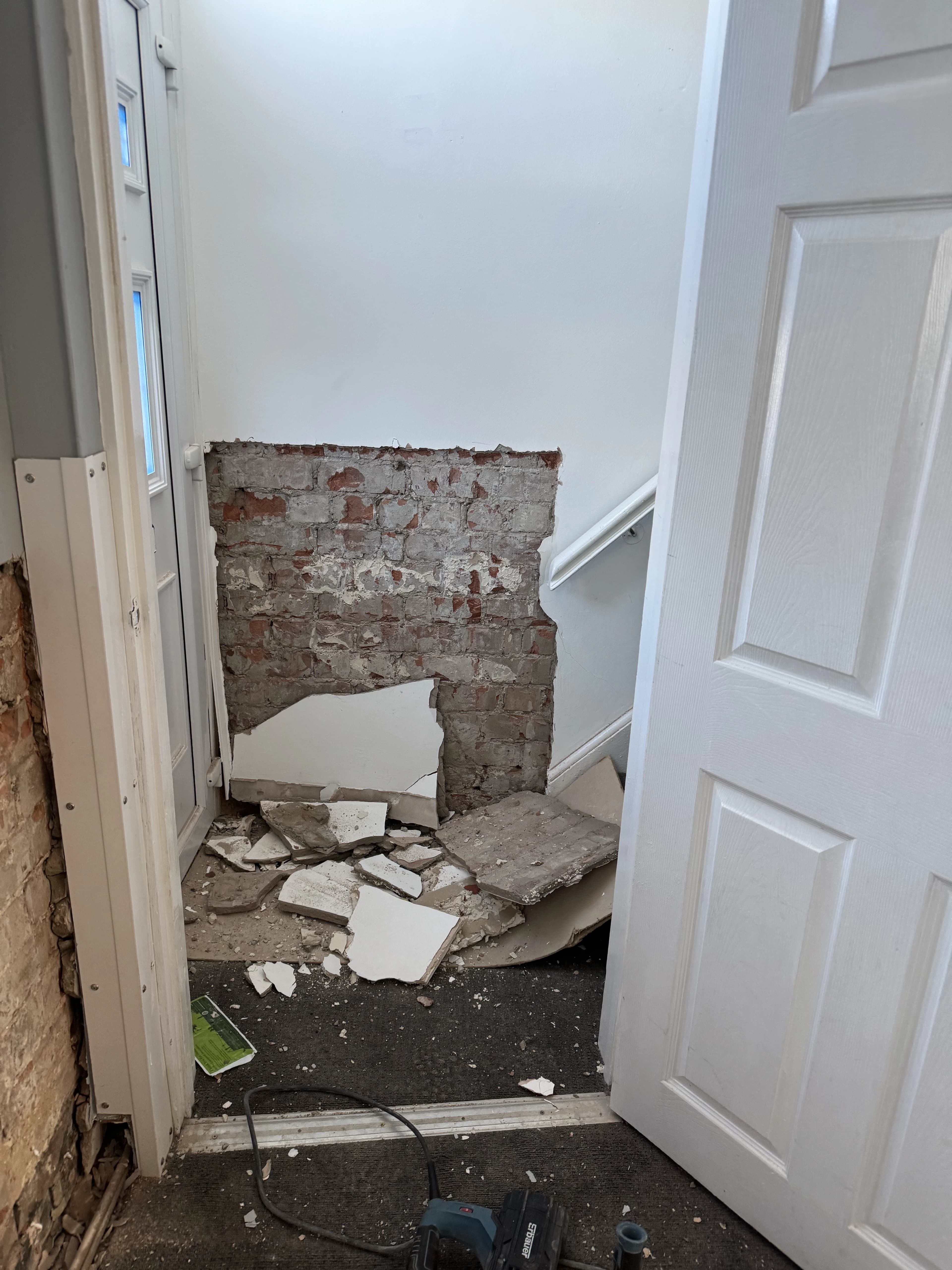
That's why the contaminated plaster must be removed. We hack off the old plaster to a height of at least 300mm above the highest point of visible damp, exposing the bare masonry. The wall is then re-plastered using a specialist salt-resistant renovation plaster system, which typically consists of:
- Salt-inhibiting render. A breathable base coat that resists salt contamination and allows residual moisture to escape.
- Finishing skim. A smooth skim coat that provides a ready-to-decorate finish, seamlessly blending with the existing wall above.
If you're wondering whether the replastering should use wet plaster or plasterboard after DPC work, our plaster vs plasterboard comparison explains why wet plaster is usually the right choice for damp-treated walls.
How Long Does It Take?
For a typical terraced or semi-detached house, the DPC injection itself can be completed in a single day. The re-plastering takes an additional one to two days, depending on how many walls are affected and the extent of the damage. In total, most jobs are completed within two to three days. To make sure everything runs smoothly, check our tips on how to prepare your home before the plasterer arrives.
The new plaster then needs time to dry, usually two to four weeks, depending on ventilation and the time of year. Only once the plaster is fully dry should you redecorate. We'll always advise you on timing and let you know when it's safe to paint.
Getting a Price
The work depends on the size of the property, the thickness of the walls and how much replastering is needed, so we price every job after a free survey. You get a fixed written quote, and the price we agree is the price you pay, with no hidden extras. Book your free survey.
Is It Guaranteed?
Yes. Every DPC we install comes with a written 20-year guarantee from the date the work is finished. If rising damp comes back through the damp course we put in, we inspect the wall and carry out further treatment, and the guarantee transfers to a new owner if you sell. The silicone-based creams we use have a proven track record spanning decades, and when installed correctly, they provide a permanent solution to rising damp. You can see examples of our completed damp proofing projects in our portfolio.
We also guarantee our plastering work. If you're not happy with any aspect of the finish, we come back and put it right. That's our promise.
Common Misconceptions
"Rising damp doesn't exist"
You'll find plenty of self-proclaimed experts online claiming that rising damp is a myth invented by the damp proofing industry. While it's true that condensation and penetrating damp are often misdiagnosed as rising damp, rising damp itself is a well-documented, scientifically proven phenomenon. The key is getting a proper diagnosis from someone who knows the difference.
"You can just paint over it"
Tanking paints and waterproof coatings can mask the symptoms temporarily, but they don't address the cause. The moisture is still there, and it will find another path, often causing more damage in the process. A proper DPC is the only long-term solution.
"It's too expensive to fix"
Leaving rising damp untreated is far more expensive in the long run. The damage will spread, timber will rot, and the cost of repair escalates dramatically. Early treatment is always the most cost-effective approach.