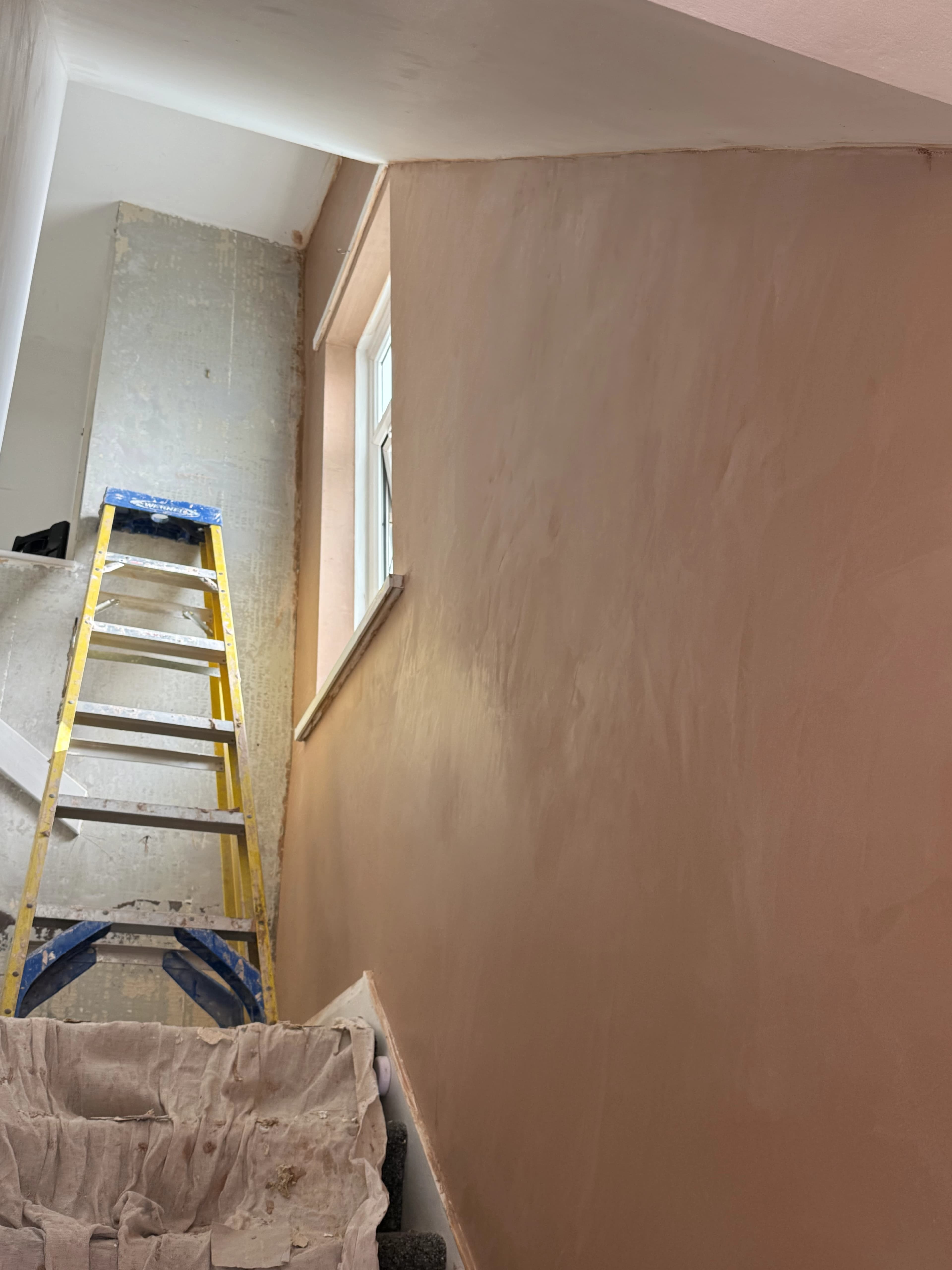
It's one of the most common questions we get asked: should I go with traditional wet plaster or plasterboard? The honest answer is that both have their place, and the right choice depends entirely on the condition of your existing walls, your budget, and what finish you're after. For a complete overview of all plastering methods, our plastering guide covers everything from float and set to skimming.
Here's a straightforward breakdown to help you make the right decision.
What Is Traditional Wet Plastering?
Traditional plastering involves applying a sand and cement base coat (or bonding coat) directly onto the wall, followed by a finishing coat of multi-finish plaster. The result is a solid, seamless surface that's bonded directly to the masonry. This method has been used for centuries and, when done properly, produces an exceptionally hard-wearing finish.
Wet plastering is a skilled trade. It takes years to learn how to apply plaster evenly and get that glass-smooth finish. The material has a limited working time, typically around 30 to 45 minutes, so the plasterer needs to work quickly and confidently. This is why the quality of the finish varies so much depending on who does the work.
What Is Plasterboard (Dot and Dab)?
Plasterboard, also known as drywall, comes in standard sheets (typically 2400mm x 1200mm) that are fixed to the wall using adhesive dabs, hence "dot and dab." Once the boards are up and the joints are taped, the entire surface receives a thin skim coat of finishing plaster, usually 2-3mm thick.
This method is faster than traditional plastering because the boards create a flat, even surface that requires much less material to finish. It's the standard approach in new-build construction and is widely used in renovations, especially when walls are uneven or damaged beyond economical repair. Our plasterboarding service covers dot-and-dab, stud walls, and ceiling replacements.
When to Choose Wet Plaster
Wet plaster is the better choice in several situations:
- Solid, sound walls. If your existing walls are in good condition (the brickwork is solid, the existing plaster is well-bonded), then wet plastering preserves the integrity of the wall without adding unnecessary bulk.
- Small rooms. Plasterboard and adhesive adds roughly 15-25mm to each wall. In a small bathroom or cloakroom, that can make a noticeable difference. Wet plaster sits much thinner on the wall.
- Damp-treated walls. After damp proofing work, we typically apply a salt-resistant render coat followed by a skim. This creates a breathable system that won't trap moisture behind boards. If you suspect damp on your property, read our guide on the five warning signs of rising damp before deciding on a plastering method.
- Period properties. In older homes, wet plaster follows the natural contours of the wall and maintains the character of the building. Plasterboard can look too flat and uniform against original features like coving or architraves.
When to Choose Plasterboard
Plasterboard makes more sense when:
- Walls are badly damaged. If the existing plaster is blown, crumbling, or coming away from the wall in sheets, stripping it back and re-boarding is often more cost-effective than multiple coats of wet plaster.
- Walls are very uneven. Old stone walls or walls with significant bulges and hollows can be levelled much more easily with plasterboard. The adhesive dabs act as adjustable packing, letting you create a perfectly flat surface regardless of what's behind it.
- Speed matters. A room that might take two days to wet plaster can often be boarded and skimmed in a day. If you're renovating a whole house and time is a factor, plasterboard can significantly reduce the programme.
- You need insulation. Insulated plasterboard (thermal board) combines a layer of insulation with the plasterboard in a single sheet. It's an efficient way to improve the thermal performance of external walls during a renovation. This is especially relevant for garage conversions, where thermal board is typically the go-to solution for insulating single-skin walls.
Cost Comparison
In general, plasterboard with a skim tends to be slightly cheaper than full wet plastering, because it uses less material and takes less time. However, the cost difference is often smaller than people expect, typically 10-20%, because the plasterboard itself has a material cost that offsets some of the labour saving.
The real cost savings come from the condition of your existing walls. If your walls need extensive preparation before wet plastering (hacking off old plaster, raking out joints, applying PVA or SBR), that preparation time can push the cost above plasterboarding. Conversely, if your walls are sound and just need a fresh skim, wet plastering can be the more economical option.
What About Durability?
Both methods produce an excellent finish when done properly. Wet plaster tends to be harder and more resistant to knocks and dents, since the wall behind it is solid masonry, so there's no hollow spot to punch through. Plasterboard is more susceptible to impact damage, especially in high-traffic areas like hallways.
That said, plasterboard is perfectly adequate for the vast majority of domestic situations. It's used in virtually every new-build home in the country, and millions of people live happily with it without ever giving it a second thought.
Our Recommendation
We always assess each wall individually when quoting a job. In most renovations, we end up using a combination of both methods: wet plaster on walls that are in good condition, and plasterboard on walls that need more work. It's not a one-size-fits-all decision, and any plasterer who tells you otherwise is oversimplifying. Before we arrive, there are a few simple things you can do to speed up the process; our guide on preparing your home before the plasterer arrives walks you through the checklist.
The most important thing is that the work is done properly, regardless of method. A bad plasterboard job with poorly taped joints and an uneven skim is worse than a good wet plaster job, and vice versa. The skill of the tradesperson matters far more than the choice of material. Browse our recent plastering projects to see the standard of finish we deliver, and get a free quote when you're ready.