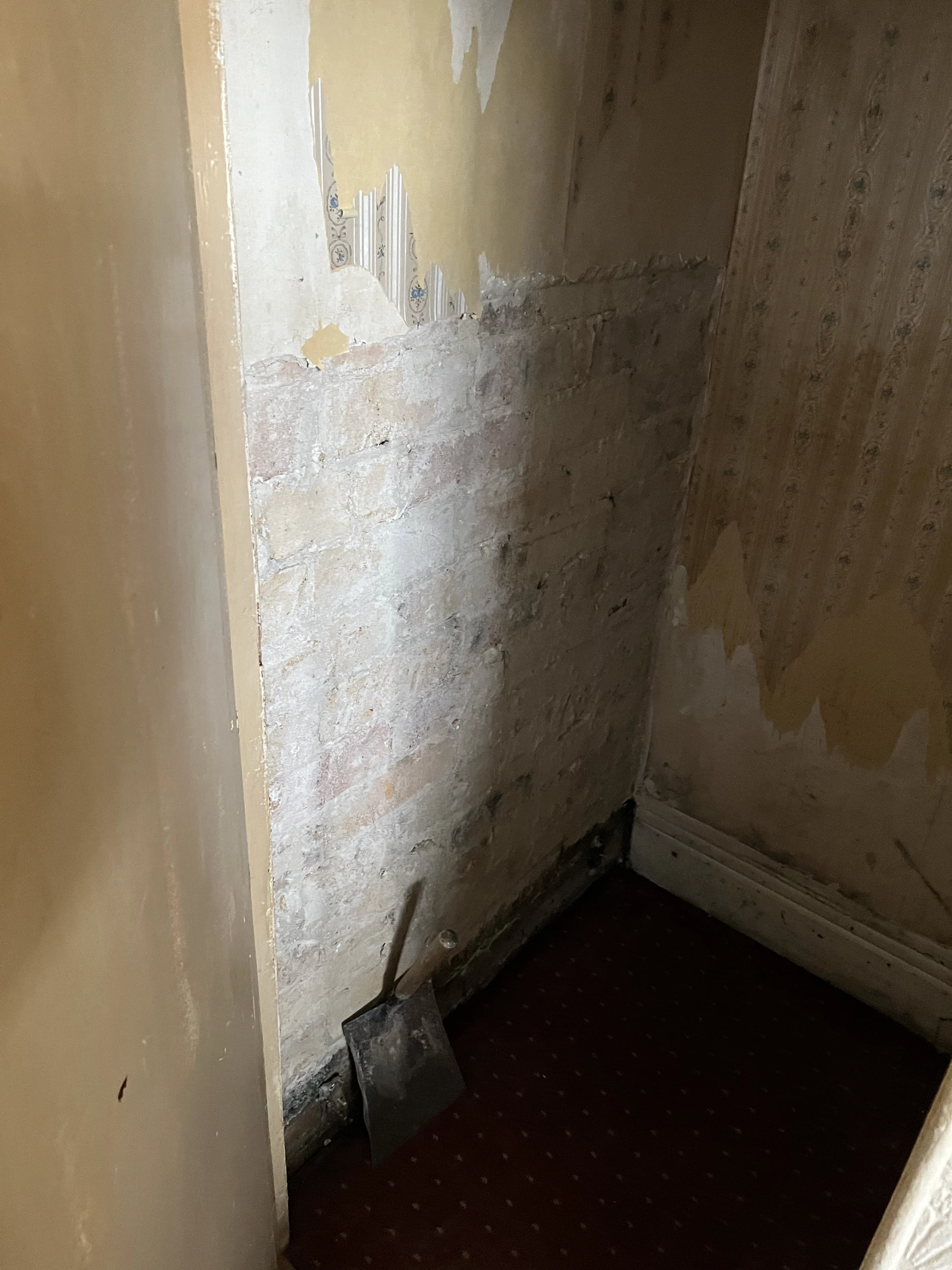
Rising damp is one of the most common, and most misunderstood, problems in older properties across the North East. Left untreated, it can cause serious structural damage, ruin your decor, and even affect your health. The good news is that it's easy to spot if you know what to look for, and straightforward to fix with the right approach. If you're unsure whether your property is affected, our comprehensive damp proofing guide covers every type of damp in detail.
Here are the five warning signs that should set alarm bells ringing.
1. Tide Marks on Your Walls
This is the classic sign of rising damp. You'll notice a horizontal stain running along the base of your internal walls, usually up to about a metre high. It often looks like a yellowish-brown watermark, hence the name "tide mark." The line is caused by ground moisture being drawn up through the brickwork by capillary action. As the water evaporates, it leaves behind mineral salts that create that distinctive discolouration.
Tide marks are easiest to spot on light-coloured walls. If your walls are papered, you might see the stain bleeding through, or the paper itself may start to darken and deteriorate at the base.
2. Peeling Wallpaper or Bubbling Paint
When moisture migrates through masonry and into your plaster, it breaks the bond between the wall surface and any decorative finish. You'll see wallpaper peeling away from the bottom up, or paint bubbling and flaking. In severe cases, the plaster itself will start to crumble and blow; it feels soft and powdery when you press it.
Many homeowners repaint or re-paper over these symptoms, only for them to come back within a few months. That's because the underlying moisture problem hasn't been addressed. Redecorating without treating the damp is just papering over the cracks, quite literally. To understand how the replastering process works after damp treatment, read our guide on plaster vs plasterboard and which method suits damp-affected walls.
3. White Salt Deposits (Efflorescence)
Those white, powdery crystals on your wall aren't mould. They're mineral salts. As moisture rises through the brickwork, it carries dissolved salts from the masonry. When the water evaporates at the surface, these salts are left behind as a white, crusty deposit. This is called efflorescence, and it's a reliable indicator of moisture movement through your walls.
You can brush efflorescence off, but it will keep coming back until the source of moisture is dealt with. The salts themselves can also be hygroscopic, meaning they attract moisture from the air, making the wall feel perpetually damp even in dry weather.
4. A Persistent Musty Smell
Damp walls create the perfect environment for mould and mildew to thrive. Even if you can't see visible mould growth, you may notice a musty, earthy smell that lingers no matter how much you ventilate the room. This smell tends to be strongest in corners, behind furniture, and in rooms that are less frequently used.
Beyond being unpleasant, airborne mould spores can aggravate asthma, allergies, and other respiratory conditions. If anyone in your household has been experiencing unexplained breathing difficulties or persistent sneezing, damp could well be a contributing factor.
5. Damaged Skirting Boards and Floor Coverings
Rising damp doesn't just affect your walls. The moisture can spread to timber skirting boards, causing them to warp, swell, or rot. You might notice the skirting pulling away from the wall, or dark staining along the bottom edge. In the worst cases, the timber becomes soft enough to push your finger through. If your skirting and joinery need replacing after damp treatment, our joinery and refurbishment service covers full reinstatement.
Floor coverings near affected walls can also suffer. Carpet may develop damp patches, vinyl can lift, and tiles may come loose as the adhesive breaks down. If you're finding that your floor coverings keep failing in the same spot, rising damp is a likely culprit.
What Causes Rising Damp?
Rising damp occurs when the damp proof course (DPC) in your walls fails or is missing entirely. The DPC is a barrier, usually a layer of slate, bitumen, or plastic, built into the wall just above ground level to stop moisture from travelling upwards. In older properties built before the 1870s, there may be no DPC at all. In others, the original DPC may have deteriorated over decades of use. Our in-depth DPC installation guide explains exactly how a replacement damp proof course works and what the process involves.
External factors can also contribute. If soil, paving, or render has been built up above the DPC line (a common problem after landscaping or extension work), moisture can bypass the barrier entirely. This is called a "bridged DPC" and is one of the most frequent causes we see on site.
What Should You Do About It?
If you're seeing any of these signs, the worst thing you can do is ignore them. Rising damp doesn't get better on its own; it gets worse. The moisture will continue to travel upwards, causing more damage to your plaster, your timber, and your decor.
The most effective treatment is a chemical injection DPC, which creates a new damp proof barrier within the masonry. Once the DPC is in place, the affected plaster is hacked off and replaced with specialist renovation plaster that resists salt contamination. The wall is then finished with a smooth skim coat, ready for decoration.
We always recommend getting a proper survey before any work begins. A good damp specialist will use a protimeter (electronic moisture meter) to map the extent of the problem and confirm whether it really is rising damp, as opposed to condensation or penetrating damp, which require different treatment approaches. Ready to find out for sure? Request a free damp survey and we'll come and take a look. You can also browse examples of our damp proofing work to see the kind of results we deliver.