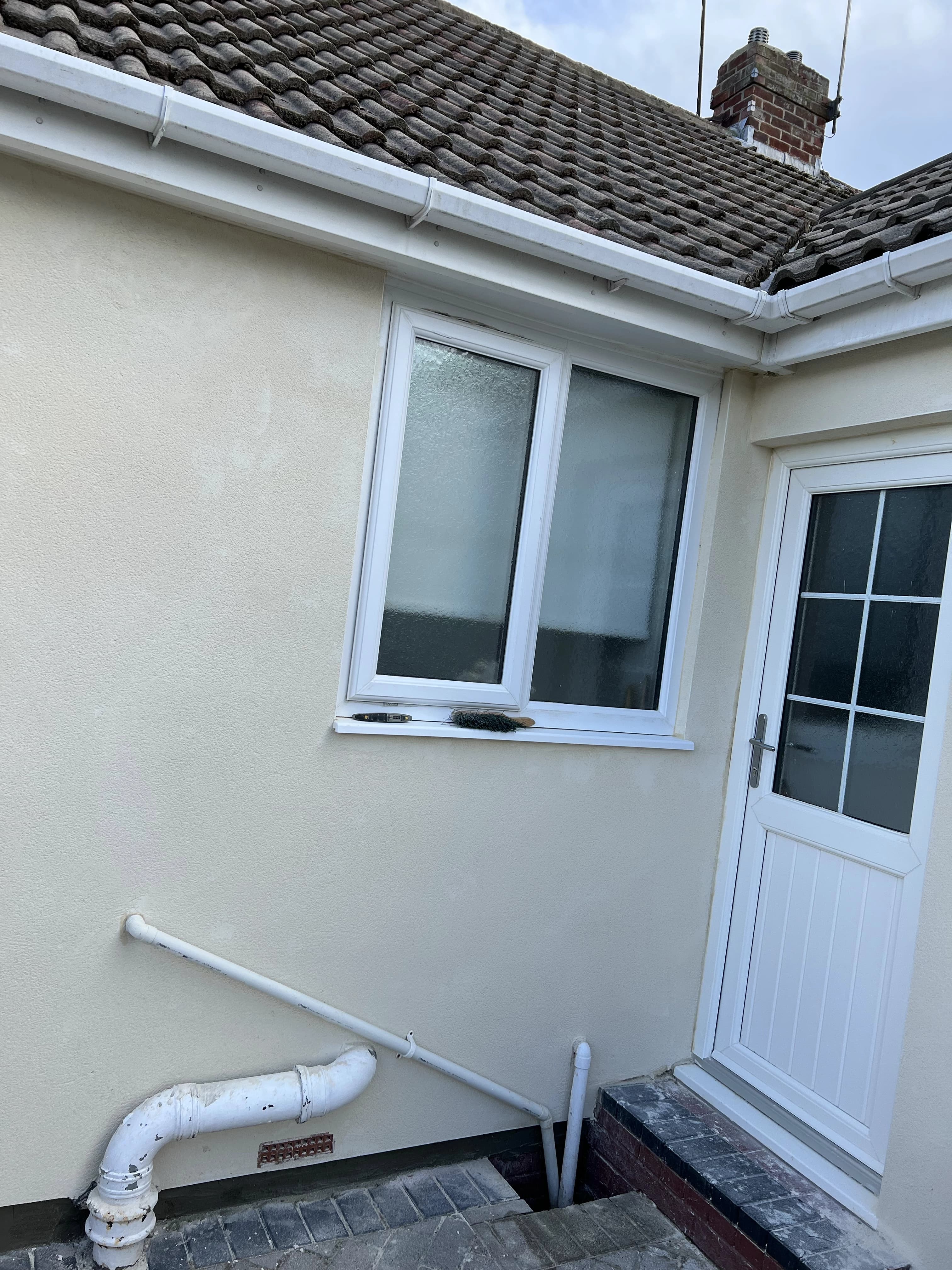
If you're looking to update the exterior of your home, you've probably come across two main options: traditional sand and cement render, and K-Rend (a popular brand of silicone render). Both will transform the look of your property, but they differ significantly in cost, durability, maintenance, and finish. Here's an honest comparison.
Traditional Sand and Cement Render
Traditional rendering uses a mix of sand, cement, and water applied in two or three coats to the external walls. It's been the standard method of rendering in the UK for well over a century, and when done properly it provides a solid, durable finish that can last decades.
Pros
- Lower material cost. Sand and cement are cheap and widely available. This makes traditional render the more affordable option upfront.
- Proven track record. It's been used for generations. When mixed and applied correctly, it's incredibly hard-wearing.
- Easy to repair. If a section cracks or gets damaged, it can be patched with the same material. Repairs blend in once painted.
- Paintable. You can paint traditional render any colour you like, and change it whenever you fancy a refresh.
Cons
- Needs painting. Sand and cement render must be painted with a masonry paint to protect it from the elements. This needs doing every 5-8 years.
- Can crack. Cement-based render is rigid. As the building moves slightly with temperature changes (thermal movement), hairline cracks can appear, especially around window and door openings.
- Algae and dirt. Painted render in the North East tends to attract algae growth on north-facing elevations. You'll need to pressure wash or treat it periodically.
K-Rend (Silicone Render)
K-Rend is a factory-mixed, through-coloured silicone render. "Through-coloured" means the colour is mixed into the material itself, not painted on afterwards. It comes in bags ready to mix with water and is applied in a single coat (typically 20-25mm thick) over a base coat and mesh reinforcement.
Pros
- No painting required. The colour is integral to the render, so there's no need to paint it after application. This saves ongoing maintenance costs.
- Flexible. Silicone render has more flex than cement render, which means it's less prone to cracking from thermal movement.
- Self-cleaning. K-Rend has a hydrophobic (water-repellent) surface. Rain runs off it rather than soaking in, taking dirt with it. This keeps the finish looking cleaner for longer.
- Wide colour range. K-Rend is available in over 100 colours, from brilliant white to charcoal grey and everything in between.
- Breathable. Silicone render allows moisture vapour to pass through it, which helps prevent trapped moisture and condensation within the wall structure.
Cons
- Higher upfront cost. K-Rend material costs significantly more than sand and cement.
- Harder to repair. If a section gets damaged, matching the colour and texture of an existing K-Rend finish can be tricky. Patch repairs sometimes stand out, especially on lighter colours.
- Colour fading. While K-Rend is UV-stable, darker colours can fade slightly over many years, particularly on south-facing walls. Lighter colours tend to hold better.
- Not easily repainted. If you decide you want a different colour in ten years, you can't just slap a coat of masonry paint on it. Silicone render doesn't take paint well due to its water-repellent surface.
Upfront Cost Against Upkeep
Sand and cement is cheaper to put on, but it needs repainting every 5 to 8 years. K-Rend costs more upfront and never needs painting, so over 20 years the two often come out close. If you're considering combining rendering with other improvements like a garage conversion, the external insulation benefits of K-Rend become even more compelling.
Every house is different, so we price rendering after a free visit and give you a fixed quote for the system you choose. The price we agree is the price you pay.
Which Should You Choose?
It depends on your priorities and budget:
- Choose traditional render if you're on a tighter budget, want the flexibility to change colours easily, or are rendering a property that may need future alterations (extensions, window changes).
- Choose K-Rend if you want a premium, low-maintenance finish that will look good for years without repainting. It's especially popular for modernising the appearance of ex-council houses, pebble-dashed properties, and 1960s/70s homes.
While you're thinking about the outside of your property, it's also worth checking for signs of rising damp on the inside. Failed render can allow water ingress that contributes to penetrating damp problems, and re-rendering is the perfect time to address both issues together.
A Word on Application
Whichever option you choose, the quality of the application matters far more than the material. K-Rend applied badly will crack and fail just as quickly as cheap cement render. The preparation (cleaning the substrate, applying the right base coat, using reinforcement mesh at stress points) is where the skill lies. To get a sense of the standard we work to, take a look at our completed rendering projects.
We apply both types of render regularly and will always recommend the option that makes the most sense for your property, your budget, and the look you're going for. No hard sell, just honest advice. Request a free rendering quote and we'll come out and assess your property.