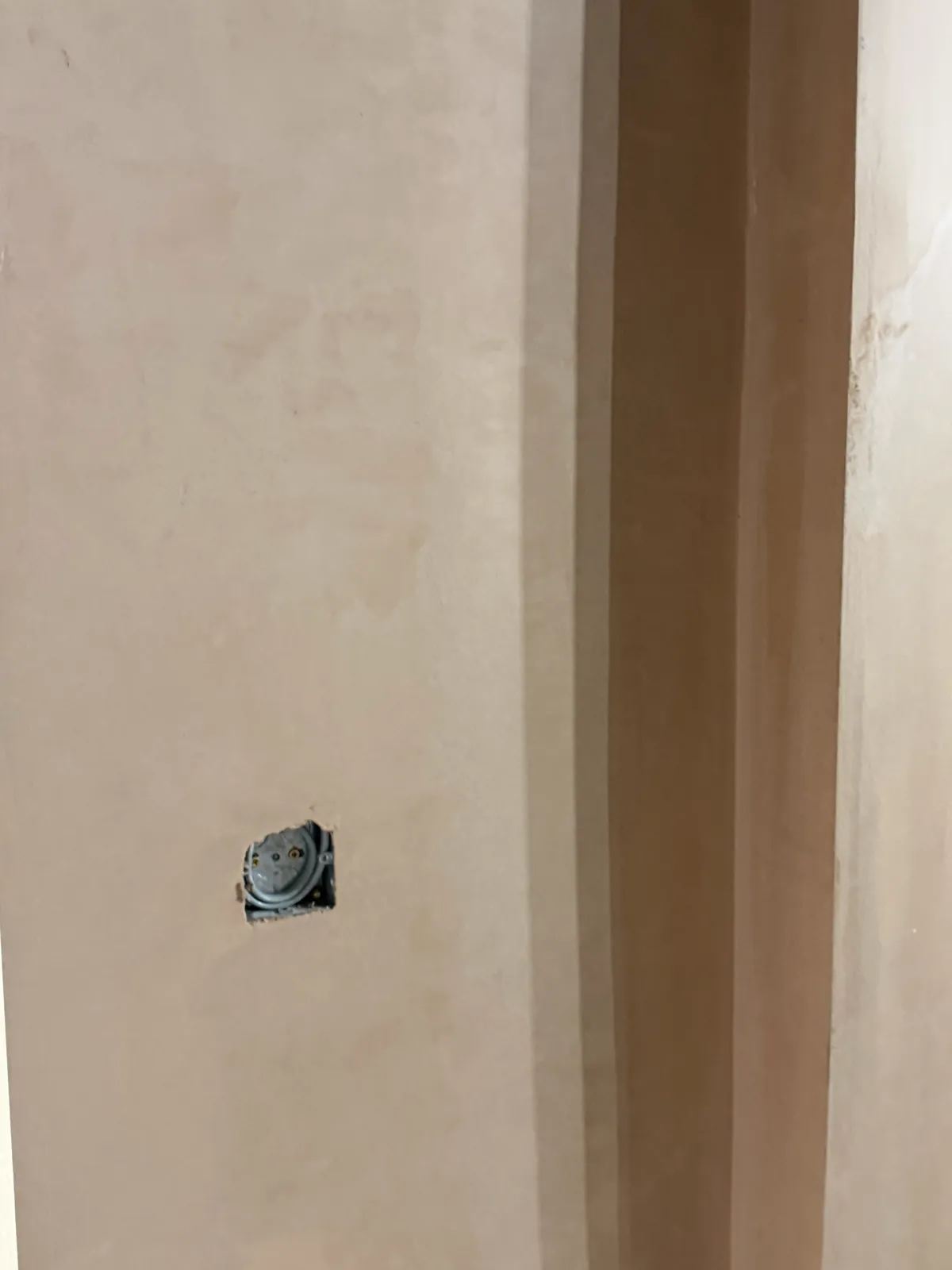
A fresh skim coat normally needs two to four weeks to dry before you paint it. Float and set, renovation plaster and anything over a metre of new backing coat takes longer, often four to six weeks and sometimes more in a cold room. The plaster will look dry well before it is dry, which is where most painting disasters start. Here is how to judge it properly, and how to paint it so the finish lasts.
Why fresh plaster takes so long
Plaster sets in a couple of hours, but setting and drying are different things. Setting is a chemical reaction that makes it hard. Drying is the water from the mix leaving the wall, and that only happens by evaporation from the surface. A two to three millimetre skim over plasterboard holds a little water and dries quickly. A full float and set over brick holds a lot, and the backing coat underneath keeps feeding moisture to the surface for weeks. The thicker the plaster and the colder and stiller the room, the longer it takes.
How to tell when it is ready
Fresh plaster goes on dark pink or brown. As it dries it turns a pale, even, almost peachy colour. Until the whole wall is that uniform pale shade it is not ready. Dark patches, usually in corners, around windows and low on the wall, are the last bits to dry and the first bits to go wrong if you paint over them. If you want certainty, a cheap moisture meter will tell you, but the colour test is reliable enough for most rooms.
- Skim over plasterboard: 2 to 4 weeks in a heated, ventilated room.
- Skim over sound old plaster: 2 to 4 weeks, sometimes a little longer.
- Float and set over brick or block: 4 to 6 weeks, longer in winter.
- Renovation plaster after damp treatment: follow the plasterer's guidance, because the wall behind it may still be drying out.
Speeding it up without wrecking it
Warmth and moving air do the work. Keep the heating on low and steady, open a window a little and leave internal doors open so the air changes. What you should not do is blast it with a fan heater or a dehumidifier pointed at the wall. Drying the surface too fast while the plaster behind it is still wet causes cracking and crazing, and in bad cases the skim loses its bond. Steady and gentle wins.
The mist coat, and why it matters
New plaster is thirsty. Put normal emulsion straight on it and the plaster pulls the water out of the paint before it can form a film, so it dries patchy, flakes and peels, sometimes within months. The fix is a mist coat: a cheap matt emulsion watered down, roughly 70 percent paint to 30 percent water, rolled on and left to dry. It soaks in and seals the surface. Then you paint as normal. Do not use vinyl silk, bathroom paint or anything with a sheen as a mist coat, because they sit on the surface rather than soaking in.
Mistakes we see every month
- Painting over dark patches because the rest of the wall looks fine.
- Skipping the mist coat and going straight in with a premium emulsion.
- Using PVA as a sealer before painting. It is for plasterers, not decorators, and paint over PVA will peel.
- Filling and sanding before the plaster has fully dried, which just opens it up again.
- Wallpapering too early. Paper needs the plaster fully dry and sized first, or it will lift.
Does the plasterer's finish affect drying?
A little. A well trowelled skim is dense and smooth and dries evenly. A rough or over-polished one dries unevenly and shows every flaw once painted. If you are comparing quotes for skimming or float and set, the finish is a big part of what you are paying for. Our plastering guide explains the different methods and what each should look like when done.
Kitchens, bathrooms and winter
Kitchens and bathrooms produce steam every day, which slows drying and feeds condensation onto fresh plaster. Use the extractor fan every time, keep the door open when the room is not in use, and give these rooms the longer end of the range before painting. Winter is slower across the whole house. A skim that is ready in a fortnight in July can take five weeks in January in a room that is only heated in the evenings. If you are plastering in winter and have a decorating deadline, tell the plasterer, because it may change the order the rooms are done in.
What about plasterboard that has not been skimmed?
Taped and jointed plasterboard with no skim is a different case. The board itself is dry, so you are only waiting for the joint filler to dry, usually a day or two. It still needs sealing before paint, because bare plasterboard and the jointing compound soak up paint at different rates and show through as a patchy finish. A mist coat or a dedicated plasterboard primer sorts that.
Short version
Wait for an even pale colour across the whole wall, which is usually two to four weeks for a skim and longer for thicker work. Keep the room warm and ventilated, not blasted. Mist coat first, then paint. If you are planning plastering work and want it timed around decorating, get in touch for a free quote and we will tell you when the room will be ready.